Written by the workshop at Alan Dawson Autoworks & Recovery · Updated 31 July 2026
What are the most common reasons cars fail the NCT?
Lighting and electrical faults, tyre condition, and issues found underneath around suspension, steering and brakes. Between them these account for the bulk of failures, and the first two are things an owner can check without tools.
Lighting is the single easiest category to fix and the one people most often skip, because a blown bulb at the back is invisible from the driver’s seat. Tyres are next, and worn tread is usually a symptom rather than the cause: uneven wear across one edge normally means the alignment needs doing.
The categories you cannot self-check are the ones under the car. Ball joints, bushes, drop links, brake pipes and exhaust mounts all wear gradually, and a tester with the car in the air will spot play that never shows up while you are driving.
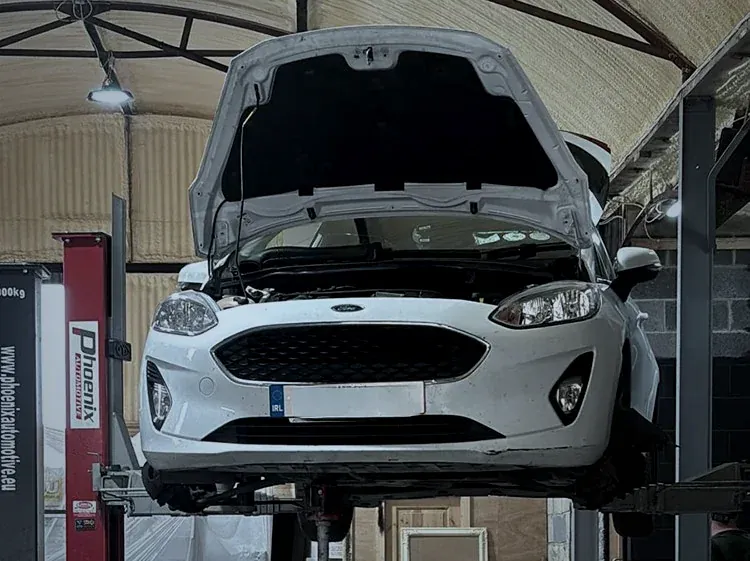
That is exactly what a pre-NCT check is for. The car goes on the lift, the same points get inspected, and you get a list with prices before the real test rather than a fail sheet after it.
Does a warning light on the dash mean an automatic NCT fail?
Several do. An illuminated engine management, ABS, airbag or brake system warning light is a failure item in its own right, regardless of how the car drives. Clearing the code without fixing the fault will not help, because it comes back.
Testers check that the warning lamps light on ignition and then go out, which is how the system proves it is working. A bulb that has been removed to hide a fault reads as a failure too.
The right order is to have the code read first so you know whether it is a sensor worth twenty euro or something structural. We read fault codes on the latest Launch diagnostic equipment, which covers the engine, ABS and the other systems the test looks at, so the answer is a diagnosis rather than a guess.
Is a pre-NCT check worth paying for?
It is if the car is more than a few years old or you do not know its recent history. It costs less than a retest plus the fixes done in a hurry, and it turns test day from a gamble into a formality.
The value is not the inspection, it is the timing. Finding a worn drop link three weeks before the test means a cheap part fitted at a normal price. Finding it on the fail sheet means a rushed repair and a second trip to the test centre.
A pre-NCT check also tells you what is coming. Brakes at 40 per cent are not a failure today, but knowing about them lets you plan the spend instead of being surprised by it. Many customers pair it with a full service so the car is only off the road once.
What do you need to bring on the day?
Your NCT appointment letter or email, your vehicle registration certificate or logbook, and photo identification. Turn up on time with at least a quarter tank of fuel and the boot cleared.
Missing paperwork is a wasted appointment, and appointments are not always easy to rebook quickly. Check the letter for anything specific to your vehicle before you set off.
Practical bits people forget: the car needs enough fuel for the emissions test, the boot needs to be empty enough to reach the spare, and if you have a locking wheel nut the key needs to be in the car.